
-
8x8 White Premium Aluminum Linear Slot Diffuser – Modern Design (Duct Opening)
Vendor:GREEN VENTRegular price $39.03Regular priceUnit price per$48.79Sale price $39.03Sale -
6x12 White Premium Aluminum Linear Slot Diffuser – Modern Design (Duct Opening)
Vendor:GREEN VENTRegular price $38.23Regular priceUnit price per$47.79Sale price $38.23Sale -
10x10 White Premium Aluminum Linear Slot Diffuser – Modern Design (Duct Opening)
Vendor:GREEN VENTRegular price $50.23Regular priceUnit price per$62.79Sale price $50.23Sale -
4x8 White Premium Aluminum Linear Slot Diffuser – Modern Design (Duct Opening)
Vendor:GREEN VENTRegular price $27.83Regular priceUnit price per$34.79Sale price $27.83Sale -
6x6 White Premium Aluminum Linear Slot Diffuser – Modern Design (Duct Opening)
Vendor:GREEN VENTRegular price $30.23Regular priceUnit price per$37.79Sale price $30.23Sale -
6x14 White Premium Aluminum Linear Slot Diffuser – Modern Design (Duct Opening)
Vendor:GREEN VENTRegular price $39.83Regular priceUnit price per$49.79Sale price $39.83Sale -
8x12 White Premium Aluminum Linear Slot Diffuser – Modern Design (Duct Opening)
Vendor:GREEN VENTRegular price $47.83Regular priceUnit price per$59.79Sale price $47.83Sale -
4x10 Matte Gray Aluminum Floor Register - Modern Design (Duct Opening)
Vendor:Green VentRegular price $33.79Regular priceUnit price per -
4x10 Matte Black Aluminum Floor Register - Modern Design (Duct Opening)
Vendor:Green VentRegular price $33.79Regular priceUnit price per -
4x12 White Premium Aluminum Linear Slot Diffuser – Modern Design (Duct Opening)
Vendor:GREEN VENTRegular price $31.03Regular priceUnit price per$38.79Sale price $31.03Sale -
2x14 Black Premium Aluminum Linear Slot Diffuser – Modern Design (Duct Opening)
Vendor:GREEN VENTRegular price $30.23Regular priceUnit price per$37.79Sale price $30.23Sale -
6x8 White Premium Aluminum Linear Slot Diffuser – Modern Design (Duct Opening)
Vendor:GREEN VENTRegular price $34.23Regular priceUnit price per$42.79Sale price $34.23Sale -
8x14 White Premium Aluminum Linear Slot Diffuser – Modern Design (Duct Opening)
Vendor:GREEN VENTRegular price $51.83Regular priceUnit price per$64.79Sale price $51.83Sale -
4x10 White Premium Aluminum Linear Slot Diffuser (Pack of 2) – Modern Design (Duct Opening)
Vendor:GREEN VENTRegular price $49.43Regular priceUnit price per$61.79Sale price $49.43Sale -
6x10 White Steel 2-Way Air Register (Pack of 4) (Duct Opening)
Vendor:GREEN VENTRegular price $37.22Regular priceUnit price per$43.79Sale price $37.22Sale -
6x12 White Steel 2-Way Air Register (Duct Opening)
Vendor:GREEN VENTRegular price $16.82Regular priceUnit price per$19.79Sale price $16.82Sale -
6x10 White Steel 2-Way Air Register (Duct Opening)
Vendor:GREEN VENTRegular price $15.12Regular priceUnit price per$17.79Sale price $15.12Sale -
4x10 White Steel 2-Way Air Register (Duct Opening)
Vendor:GREEN VENTRegular price $13.42Regular priceUnit price per$15.79Sale price $13.42Sale -
4x10 Steel Brown Floor Register (Pack of 2) - 2-Way Airflow (Duct Opening)
Vendor:GREEN VENTRegular price $24.47Regular priceUnit price per$28.79Sale price $24.47Sale -
4x10 Steel Brown Floor Register - 2-Way Airflow (Duct Opening)
Vendor:GREEN VENTRegular price $15.97Regular priceUnit price per$18.79Sale price $15.97Sale -
4x10 Steel Black Floor Register (Pack of 2) - 2-Way Airflow (Duct Opening)
Vendor:GREEN VENTRegular price $24.47Regular priceUnit price per$28.79Sale price $24.47Sale -
4x10 Steel Black Floor Register - 2-Way Airflow (Duct Opening)
Vendor:GREEN VENTRegular price $15.97Regular priceUnit price per$18.79Sale price $15.97Sale -
6x14 Black Premium Aluminum Linear Slot Diffuser – Modern Design (Duct Opening)
Vendor:GREEN VENTRegular price $39.83Regular priceUnit price per$49.79Sale price $39.83Sale -
2x12 Black Premium Aluminum Linear Slot Diffuser – Modern Design (Duct Opening)
Vendor:GREEN VENTRegular price $26.23Regular priceUnit price per$32.79Sale price $26.23Sale -
4x6 White Premium Aluminum Linear Slot Diffuser – Modern Design (Duct Opening)
Vendor:GREEN VENTRegular price $24.63Regular priceUnit price per$30.79Sale price $24.63Sale -
6x12 Black Premium Aluminum Linear Slot Diffuser – Modern Design (Duct Opening)
Vendor:GREEN VENTRegular price $38.23Regular priceUnit price per$47.79Sale price $38.23Sale -
4x12 Black Premium Aluminum Linear Slot Diffuser – Modern Design
Vendor:GREEN VENTRegular price $31.03Regular priceUnit price per$38.79Sale price $31.03Sale -
4x10 Black Premium Aluminum Linear Slot Diffuser (Pack of 2) – Modern Design (Duct Opening)
Vendor:GREEN VENTRegular price $49.43Regular priceUnit price per$61.79Sale price $49.43Sale -
4x8 Black Premium Aluminum Linear Slot Diffuser – Modern Design (Duct Opening)
Vendor:GREEN VENTRegular price $27.83Regular priceUnit price per$34.79Sale price $27.83Sale -
12x12 White Premium Aluminum Linear Slot Diffuser – Modern Design (Duct Opening)
Vendor:GREEN VENTRegular price $63.83Regular priceUnit price per$79.79Sale price $63.83Sale -
8x10 White Premium Aluminum Linear Slot Diffuser – Modern Design (Duct Opening)
Vendor:GREEN VENTRegular price $42.23Regular priceUnit price per$52.79Sale price $42.23Sale -
4x10 White Premium Aluminum Linear Slot Diffuser – Modern Design (Duct Opening)
Vendor:GREEN VENTRegular price $29.43Regular priceUnit price per$36.79Sale price $29.43Sale -
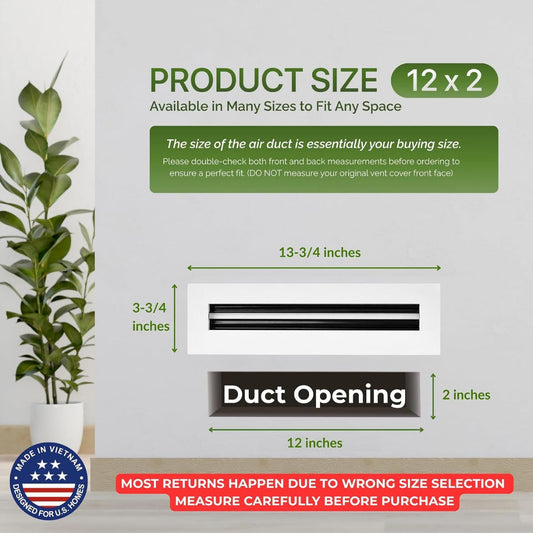
2x12 White Premium Aluminum Linear Slot Diffuser – Modern Design (Duct Opening)
Vendor:Green VentRegular price $36.79Regular priceUnit price per$29.43Sale price $36.79 -
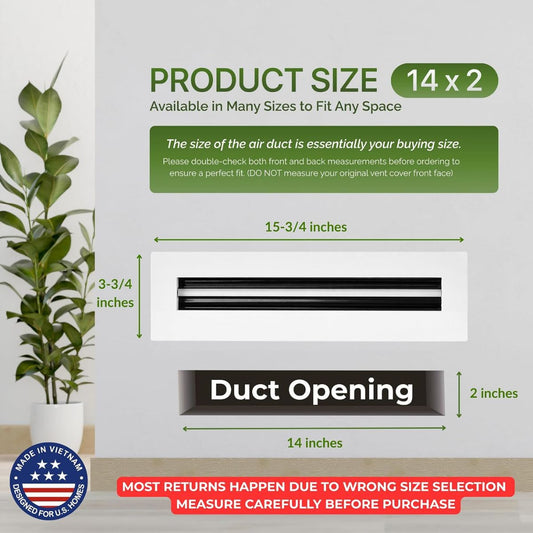
2x14 White Premium Aluminum Linear Slot Diffuser – Modern Design (Duct Opening)
Vendor:Green VentRegular price $39.79Regular priceUnit price per$31.83Sale price $39.79 -
6x10 White Premium Aluminum Linear Slot Diffuser – Modern Design (Duct Opening)
Vendor:GREEN VENTRegular price $35.83Regular priceUnit price per$44.79Sale price $35.83Notify Me -
4x10 White Aluminum Floor Register - Modern Design (Duct Opening)
Vendor:Green VentRegular price $33.79Regular priceUnit price per -
6x10 Black Premium Aluminum Linear Slot Diffuser – Modern Design (Duct Opening)
Vendor:GREEN VENTRegular price $35.83Regular priceUnit price per$44.79Sale price $35.83Notify Me -
4x10 Black Premium Aluminum Linear Slot Diffuser – Modern Design (Duct Opening)
Vendor:GREEN VENTRegular price $29.43Regular priceUnit price per$36.79Sale price $29.43Notify Me













What Is an Air Supply Vent? Definition, Function & Identification Guide
An air supply vent is the outlet in your wall, ceiling, or floor that pushes conditioned air from your HVAC system into a room. These components are the visible end point of your home's duct network—working quietly in the background to keep every room at your target temperature.
Whether you're troubleshooting uneven room temperatures, replacing a worn register, or planning a renovation, understanding your supply vents is the first step. This guide covers what they are, how to identify them, how they function, and where they work best.
Understanding exactly what a supply vent is—and how it differs from other vents—starts with one key distinction.
What Is an Air Supply Vent?
An air supply vent is a grille or register fitted to a duct opening in your wall, ceiling, or floor that delivers conditioned air—heated or cooled—from your HVAC system directly into a living space. Three related terms are worth knowing here: a vent refers to the opening itself, a grille is a fixed decorative cover without a flow-control mechanism, and a register is a cover with built-in adjustable louvers or a damper for airflow direction.
The supply vent's primary job is to maintain your desired room temperature and support indoor air quality by circulating filtered, conditioned air. Supply vents form the delivery side of the duct system—always paired with return vents and their respective air vent covers to create a complete, closed loop. Supply vents are distinct from exhaust vents, which expel air permanently outdoors and are not part of the recirculating HVAC system.

Air Supply Vent vs. Return Vent: Key Differences
The key difference between a supply vent and a return vent is airflow direction—supply vents push conditioned air out into a room, while return vents pull room air back into the system for reconditioning. Knowing this distinction helps you map your home's airflow and troubleshoot comfort problems faster.
| Feature | Air Supply Vent | Return Vent |
|---|---|---|
| Airflow Direction | Pushes conditioned air outward | Pulls room air back in |
| Typical Size | Smaller | Larger |
| Adjustability | Louvers or damper blades present | Fixed grille, no damper |
| Common Location | Room perimeter, near windows or outer walls | Central hallways, interior walls |
| Quick Test | Paper flutters away from the vent | Paper is drawn in toward the vent |
A useful secondary check: air flowing from a supply air register feels noticeably warmer or cooler than room temperature, depending on whether your system is heating or cooling. Return vents, by contrast, feel neutral to the touch—they are drawing air in, not pushing it out.

Knowing the difference is one thing—finding supply vents in your own home is the practical next step.
How to Identify Air Supply Vents in Your Home
The fastest way to identify an air supply vent is to hold a thin piece of paper or tissue in front of it while the HVAC fan is running—if the paper flutters away from the vent, it is a supply vent. This tissue test is the field-standard method HVAC professionals use during home assessments.
- Switch your HVAC system to "Fan On" mode and allow 2–3 minutes for airflow to stabilize throughout the duct network.
- Hold paper or your hand near each vent — supply vents push air outward; return vents create suction that draws the paper in toward the grille face.
- Inspect the grille face — supply registers have visible adjustable louvers or damper blades; return grilles are typically flat or mesh-style with no movable parts.
- Check size and position — supply vents are generally smaller and placed near room perimeters or windows; return vents are larger and tend to sit in central hallways or interior wall locations.
Pro Tip: If you feel conditioned air—warm in heating mode, cool in AC mode—blowing outward, it is definitively a supply vent.

Once you've located your supply vents, understanding how they fit into the broader HVAC cycle explains why their placement and condition matter.
How Air Supply Vents Work in an HVAC System
Air supply vents are the final delivery point in the supply-side duct system—they release conditioned air into a room to displace existing air and maintain the target temperature set on the thermostat. Here is how the full cycle works:
- The HVAC unit—a furnace, air conditioner, or heat pump—conditions air to the thermostat's target temperature.
- The air handler or blower fan pushes this conditioned air through a network of supply ducts running through walls, floors, and ceilings.
- Supply air vents release the air into each room, creating a slight positive pressure that promotes even distribution across the space.
- Return vents draw room air back through return ducts for filtering and reconditioning—completing the closed loop and starting the cycle again.
System balance—maintaining proportional supply and return airflow throughout the home—prevents pressure imbalances, reduces energy consumption, and extends equipment lifespan. A blocked supply vent can force the blower to work against increased duct resistance, which may raise energy bills and accelerate wear on system components over time.
Where supply vents are placed in a room directly affects how effectively they perform this function.
Best Locations for Air Supply Vents
Air supply vents are most effective when positioned to offset where your home gains or loses the most heat—placement strategy depends primarily on your climate and the installation height within the room.
- Ceiling vents and high wall registers: Well-suited to cooling-dominated climates. Cool air descends naturally from above, promoting even temperature distribution across the room without creating concentrated cold drafts near occupants.
- Floor registers: Optimal for heating-dominated climates. Warm air rises naturally from floor-level supply registers, filling the room from the ground up for consistent, even warmth.
- Near windows or exterior-facing walls: A common traditional placement that can create a warm air curtain to offset cold drafts in winter. Modern homes with high-performance insulation may benefit from interior placements instead—consult your HVAC technician for guidance specific to your construction.
Avoid this: Never block a supply vent with furniture, rugs, or curtains. Obstructions restrict airflow, increase static pressure on the HVAC blower, and create uneven temperatures across the room.

Knowing where to place supply vents matters—but knowing how to adjust and care for them is what keeps your system running efficiently long-term.
How to Adjust and Maintain Air Supply Vents
Most supply registers include adjustable louvers that let you direct airflow toward occupied areas—angle them parallel to the wall or toward the room center, never directly at furniture or walls. Never fully close a supply vent; doing so increases duct static pressure, raises energy bills, and can stress the blower motor over time. Basic upkeep means vacuuming grille faces periodically to prevent dust buildup from restricting airflow.
For a full step-by-step cleaning and maintenance guide, see How to Clean Vent Covers.
If you're ready to replace or upgrade your supply vents, Green Vent's aluminum registers and diffusers are engineered specifically for modern residential installations.
Upgrade Your Air Supply Vents with Green Vent
If your current supply vents are rusting, cracking, or simply clash with your interior, Green Vent's premium aluminum registers and diffusers deliver a modern, rust-proof replacement built for residential use. Every product is crafted from rust-resistant aluminum alloy—a lasting upgrade over corrosion-prone steel registers.
- Linear Slot Diffusers: A refined wall and ceiling supply register upgrade with a minimalist aesthetic. The Linear Slot Diffusers includes an airflow controller for precise directional adjustment, making it a strong choice for modern interiors.
- Floor Registers: Designed specifically for floor supply vent applications, featuring T-blade adjustable damper blades and rust-resistant aluminum construction for easy DIY installation.
- 2-Way Air Vent: A functional hvac supply register option for wall and ceiling supply air applications, available in 10x4, 10x6, and 12x6 sizes.
Still have questions about air supply vents? The answers to the most common homeowner questions are below.
Frequently Asked Questions About Air Supply Vents
Can I Close My Air Supply Vents to Save Energy?
No. Closing supply vents does not save energy—it increases static pressure inside the duct system, forcing your HVAC blower to work harder, which raises energy consumption and can cause premature equipment failure. Keep all supply air registers open and use louver adjustment to redirect airflow toward where you need it most.
How Is an Air Supply Vent Different from an Exhaust Vent?
An air supply vent recirculates conditioned air within your home's closed HVAC loop, while an exhaust vent expels stale or contaminated air completely outdoors. Supply air stays inside the building envelope and is continuously reused; exhaust air leaves it permanently and never returns to the system.
How Many Air Supply Vents Does a Room Need?
Most residential rooms use roughly one supply vent per 100–150 square feet of floor space as a general starting point, though the exact number depends on the room's airflow requirements, ceiling height, and your HVAC system's total output. Rooms with high ceilings, large windows, or significant heat exposure may need additional air conditioning supply registers for consistent comfort.


