
-
6x12 White Premium Aluminum Linear Slot Diffuser – Modern Design (Duct Opening)
Vendor:GREEN VENTRegular price $38.23Regular priceUnit price per$47.79Sale price $38.23Sale -
4x10 Matte Gray Aluminum Floor Register - Modern Design (Duct Opening)
Vendor:Green VentRegular price $33.79Regular priceUnit price per -
4x10 Matte Black Aluminum Floor Register - Modern Design (Duct Opening)
Vendor:Green VentRegular price $33.79Regular priceUnit price per -
4x12 White Premium Aluminum Linear Slot Diffuser – Modern Design (Duct Opening)
Vendor:GREEN VENTRegular price $31.03Regular priceUnit price per$38.79Sale price $31.03Sale -
4x10 Matte Gray Aluminum Floor Return Grill With Washable Filter – Modern Design (Duct Opening)
Vendor:Green VentRegular price $29.79Regular priceUnit price per -
4x10 White Aluminum Floor Return Grill With Washable Filter – Modern Design (Duct Opening)
Vendor:Green VentRegular price $29.79Regular priceUnit price per -
4x10 Matte Black Aluminum Floor Return Grill With Washable Filter – Modern Design (Duct Opening)
Vendor:Green VentRegular price $29.79Regular priceUnit price per -
4x10 Steel Brown Floor Register (Pack of 2) - 2-Way Airflow (Duct Opening)
Vendor:GREEN VENTRegular price $24.47Regular priceUnit price per$28.79Sale price $24.47Sale -
4x10 Steel Brown Floor Register - 2-Way Airflow (Duct Opening)
Vendor:GREEN VENTRegular price $15.97Regular priceUnit price per$18.79Sale price $15.97Sale -
4x10 Steel Black Floor Register (Pack of 2) - 2-Way Airflow (Duct Opening)
Vendor:GREEN VENTRegular price $24.47Regular priceUnit price per$28.79Sale price $24.47Sale -
4x10 Steel Black Floor Register - 2-Way Airflow (Duct Opening)
Vendor:GREEN VENTRegular price $15.97Regular priceUnit price per$18.79Sale price $15.97Sale -
6x12 Black Premium Aluminum Linear Slot Diffuser – Modern Design (Duct Opening)
Vendor:GREEN VENTRegular price $38.23Regular priceUnit price per$47.79Sale price $38.23Sale -
4x12 Black Premium Aluminum Linear Slot Diffuser – Modern Design
Vendor:GREEN VENTRegular price $31.03Regular priceUnit price per$38.79Sale price $31.03Sale -
4x10 White Premium Aluminum Linear Slot Diffuser – Modern Design (Duct Opening)
Vendor:GREEN VENTRegular price $29.43Regular priceUnit price per$36.79Sale price $29.43Sale -
4x10 Black Premium Aluminum Linear Slot Diffuser (Pack of 2) – Modern Design (Duct Opening)
Vendor:GREEN VENTRegular price $49.43Regular priceUnit price per$61.79Sale price $49.43Sale -
4x8 White Premium Aluminum Linear Slot Diffuser – Modern Design (Duct Opening)
Vendor:GREEN VENTRegular price $27.83Regular priceUnit price per$34.79Sale price $27.83Sale -
4x10 White Premium Aluminum Linear Slot Diffuser (Pack of 2) – Modern Design (Duct Opening)
Vendor:GREEN VENTRegular price $49.43Regular priceUnit price per$61.79Sale price $49.43Sale -
6x14 White Premium Aluminum Linear Slot Diffuser – Modern Design (Duct Opening)
Vendor:GREEN VENTRegular price $39.83Regular priceUnit price per$49.79Sale price $39.83Sale -
4x8 Black Premium Aluminum Linear Slot Diffuser – Modern Design (Duct Opening)
Vendor:GREEN VENTRegular price $27.83Regular priceUnit price per$34.79Sale price $27.83Sale -
2x12 Black Premium Aluminum Linear Slot Diffuser – Modern Design (Duct Opening)
Vendor:GREEN VENTRegular price $26.23Regular priceUnit price per$32.79Sale price $26.23Sale -
2x14 Black Premium Aluminum Linear Slot Diffuser – Modern Design (Duct Opening)
Vendor:GREEN VENTRegular price $30.23Regular priceUnit price per$37.79Sale price $30.23Sale -
6x14 Black Premium Aluminum Linear Slot Diffuser – Modern Design (Duct Opening)
Vendor:GREEN VENTRegular price $39.83Regular priceUnit price per$49.79Sale price $39.83Sale -
2x12 White Premium Aluminum Linear Slot Diffuser – Modern Design (Duct Opening)
Vendor:Green VentRegular price $36.79Regular priceUnit price per$29.43Sale price $36.79 -
2x14 White Premium Aluminum Linear Slot Diffuser – Modern Design (Duct Opening)
Vendor:Green VentRegular price $39.79Regular priceUnit price per$31.83Sale price $39.79 -
6x10 White Premium Aluminum Linear Slot Diffuser – Modern Design (Duct Opening)
Vendor:GREEN VENTRegular price $35.83Regular priceUnit price per$44.79Sale price $35.83Notify Me -
4x10 White Aluminum Floor Register - Modern Design (Duct Opening)
Vendor:Green VentRegular price $33.79Regular priceUnit price per -
6x10 Black Premium Aluminum Linear Slot Diffuser – Modern Design (Duct Opening)
Vendor:GREEN VENTRegular price $35.83Regular priceUnit price per$44.79Sale price $35.83Notify Me -
4x10 Black Premium Aluminum Linear Slot Diffuser – Modern Design (Duct Opening)
Vendor:GREEN VENTRegular price $29.43Regular priceUnit price per$36.79Sale price $29.43Notify Me


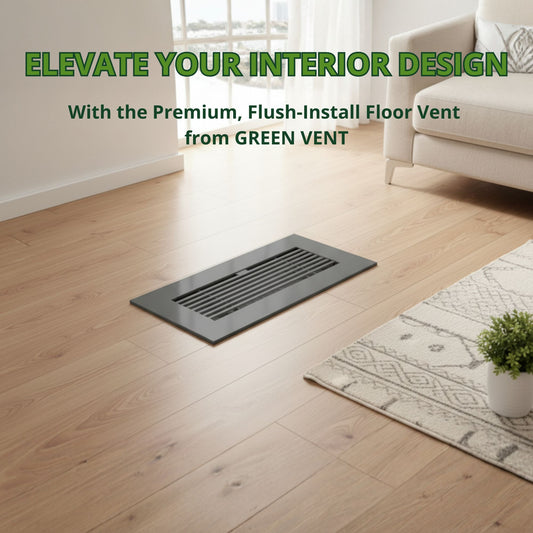

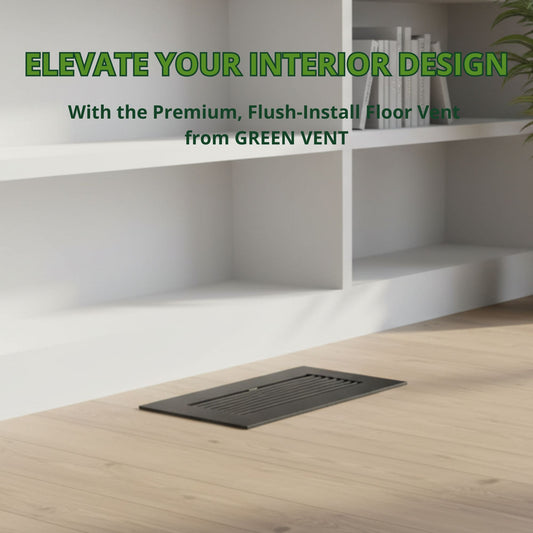


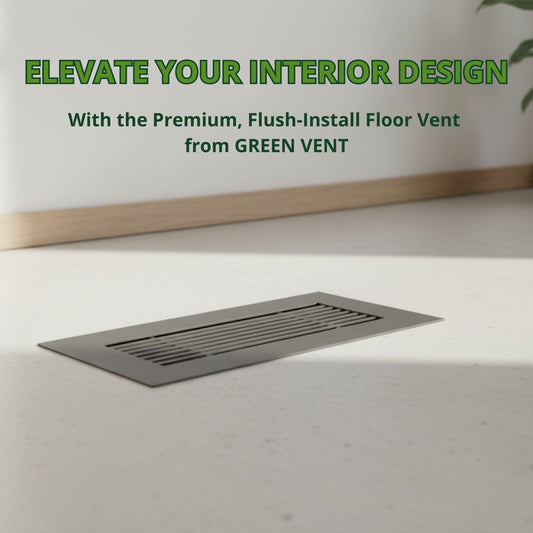



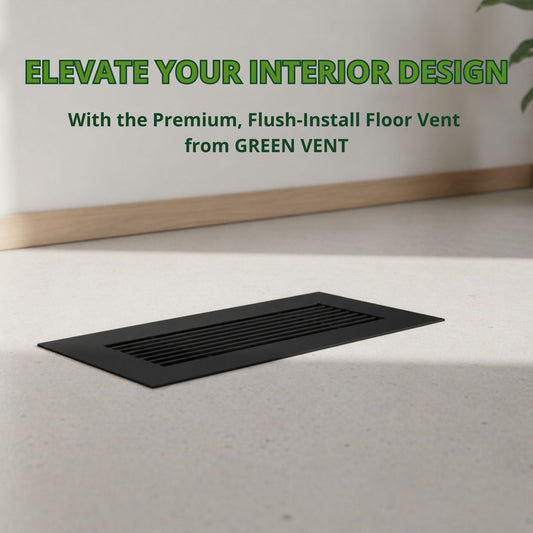








Floor Vent Covers: Types, Materials & Modern Buying Guide
Vent covers for floor duct openings — also called floor registers and floor return grilles — are components installed directly over HVAC duct openings in a home's floor to control and direct conditioned air throughout each room. They serve a dual purpose: managing airflow from the system and complementing the surrounding flooring's aesthetic.
Homeowners prioritize rust-resistant materials, modern minimalist finishes, and covers that fit cleanly without shimming or modification. This guide covers types, materials, sizing, and Green Vent's complete floor vent cover collection to help you choose with confidence.
What Are Floor Vent Covers?
Floor vent covers are components placed over duct openings in the floor, functioning either as supply registers — distributing conditioned air into a room — or return grilles, which pull air back to the HVAC system.

- Aesthetic upgrade: Replace corroded or outdated vents with a modern, clean-line finish that complements hardwood, tile, and luxury vinyl
- Airflow control: Direct or restrict conditioned air precisely where it is needed in each room
- Rust-proof longevity: Aluminum construction resists moisture and corrosion in high-humidity environments
The dominant buyer preference in residential settings has shifted toward rust-resistant aluminum for most interior floor applications. Floor vent covers come in several distinct types, each suited to different floors, traffic levels, and HVAC configurations.
Types of Floor Vent Covers Compared
Floor vent covers fall into three primary types — floor registers, floor return grilles, and linear slot floor diffusers — and the right type depends on function and your floor's design style.

| Type | Material | Key Feature | Best For | Green Vent Option |
|---|---|---|---|---|
| Aluminum Floor Register | Aluminum | T-blade adjustable damper (OBD) | Supply air, hardwood/tile floors | White / Matte Gray / Black |
| Aluminum Floor Return Grille | Aluminum | No damper, washable pre-filter | Return air, basements, cold air returns | White / Matte Black / Matte Gray |
| Steel 2-Way Floor Register | Steel | Heavy-duty walkable, mesh trap | High-traffic areas, entryways | Matte Black / Brown, 10×4 (2-pack) |
| Linear Slot Floor Diffuser | Aluminum | Adjustable airflow controller | Modern minimalist, open-plan | White / Black, multiple sizes |
For a dedicated look at linear slot options, visit the Linear Slot Diffusers. Once you've identified the right type, material, size, and style determine the best choice.
Supply (Register) vs. Return Floor Vent Covers
Supply floor registers include adjustable dampers to control airflow output into a room; return floor grilles use fixed louvers and may include an integrated filter to capture airborne particles before air re-enters the HVAC system. Learn more about floor register vs. return grille.
How to Choose the Right Floor Vent Cover
Choosing the right floor vent cover depends on three factors: material (determines durability and moisture performance), size (must match duct opening dimensions), and style (must align with flooring finish and room function).
Material: Aluminum vs. Steel
Aluminum is the best material for most residential floor vent covers because it is naturally rust-resistant, lightweight, and handles daily foot traffic well — making it the preferred choice for kitchens, bathrooms, and high-moisture rooms. Steel suits entryways and corridors that require a heavier, walkable construction — Green Vent's Steel 2-Way Floor Register is available in Matte Black and Brown for this application. Explore the full breakdown at aluminum vs. steel floor vent covers.
Size & Fit: Measuring Your Floor Duct Opening
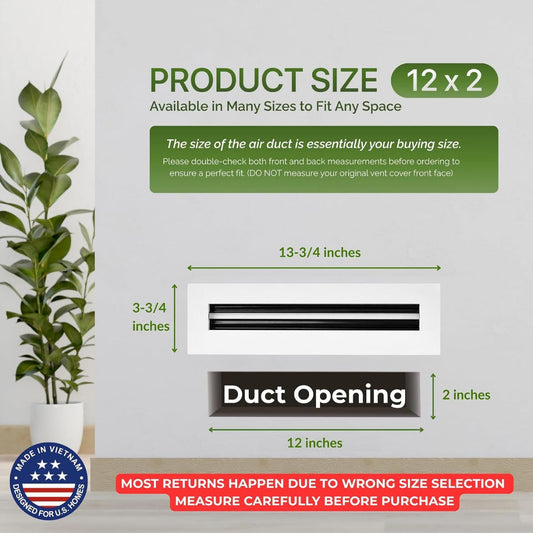
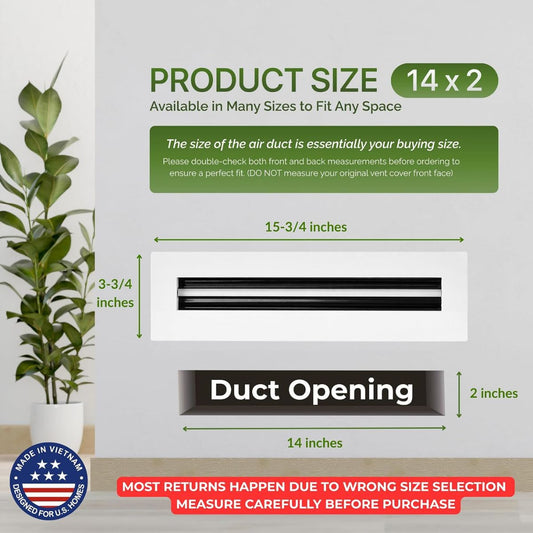
Floor vent cover sizes are based on the duct opening dimensions, not the outer flange — always measure the duct hole's width and length before purchasing. The most common residential duct opening is 4×10 inches; Green Vent offers this size across both aluminum and steel options. Use the how to measure your duct opening guide before ordering.
Style & Features: Dampers, Finish, and Floor Compatibility
For supply floor vents, choose a register with an adjustable damper (OBD) to control airflow output; for return floor vents, choose a fixed-louver grille with an integrated filter to maintain clean air intake.
- Damper control: Aluminum Floor Register with OBD — best for supply air in living rooms, bedrooms, and hallways
- Filter-ready: Aluminum Floor Return Grille with fixed louver — best for clean return air intake
- Finish matching: White or Matte Gray suits light flooring; Matte Black or Brown (Steel 2-Way, heavy-duty walkable with mesh trap) works well for dark or stained hardwood
Green Vent Floor Vent Covers: Our Collection
Green Vent's floor vent cover collection is built from premium rust-resistant aluminum and heavy-duty steel, engineered for modern residential interiors and straightforward DIY installation.

Aluminum Floor Register
T-blade adjustable damper (OBD) | Aluminum | White, Matte Gray
Best for: Supply air in living rooms, bedrooms, and kitchens
Aluminum Floor Return Grille
No damper, washable pre-filter | Aluminum | White, Matte Black, Matte Gray
Best for: Return air on floors, basements, and cold-air-return openings
Linear Slot Floor Diffuser
Low-profile linear-slot design | Premium rust-resistant aluminum | White, Matte Black
Best for: Supply or return air in hallways, open-plan living areas, and modern floor applications
Steel 2-Way Floor Register
Heavy-duty walkable + mesh trap | Steel | Matte Black, Brown | 10×4 inches | Available in 2-pack
Best for: Entryways, high-traffic corridors, and dark hardwood or stained floors
Browse the complete Floor Registers and Floor Vent Covers for the full range of sizes and finishes.
Frequently Asked Questions About Floor Vent Covers
These are the most common questions buyers ask before purchasing floor vent covers.
Can I install a floor vent cover myself?
Yes — all Green Vent floor registers and return grilles are designed for tool-free or basic-tool drop-in installation, making them fully DIY-compatible for most standard duct openings. Follow thestep-by-step installation guide for a complete walkthrough.
What is the best material for a floor vent cover?
Aluminum is the best material for most residential floor vent covers because it does not rust, resists corrosion in humid environments, and maintains a modern finish over time. Steel is the better choice when maximum foot-traffic durability and a walkable load rating are required. Compare both in the aluminum vs. steel floor registers guide.
What size floor vent cover do I need?
You need a floor vent cover sized to match your duct opening — the most common residential duct opening is 4×10 inches. Measure the duct hole, not the old cover's outer flange, to ensure a correct fit.


